
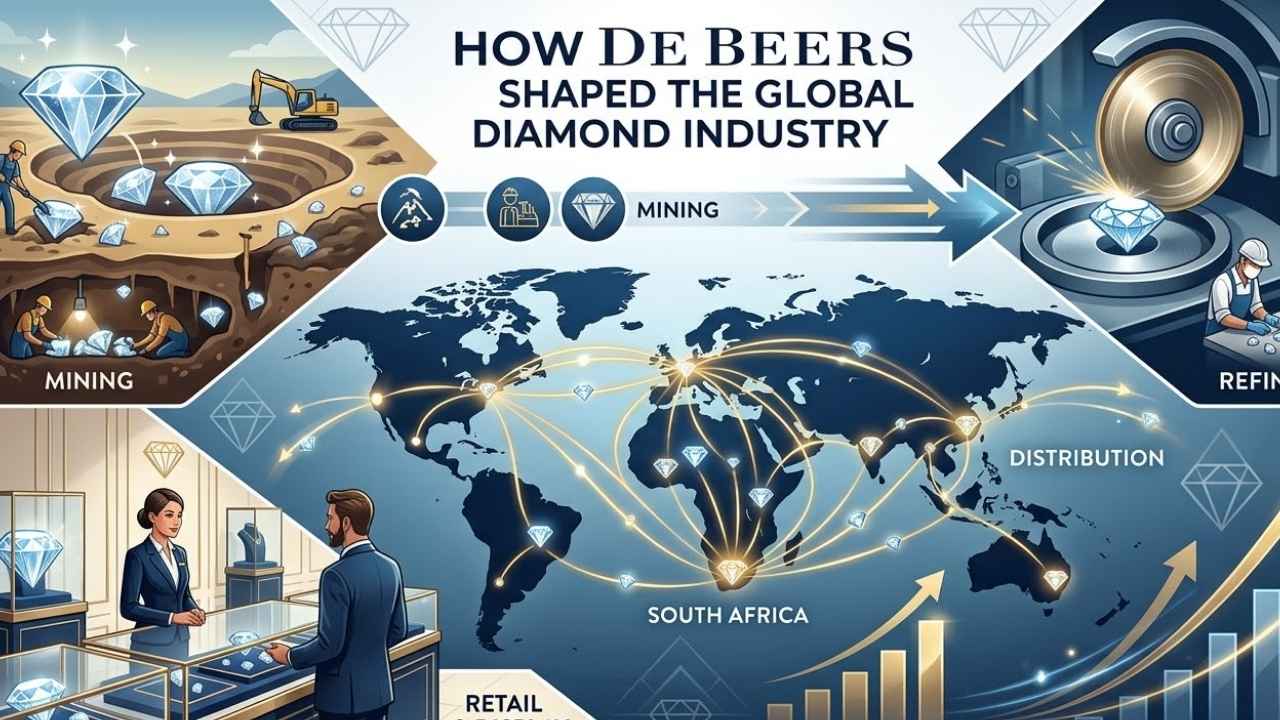
Did you know that one company played a huge role in turning diamonds into the world’s most desired symbol of love and luxury? The story of How De Beers Shaped the Global Diamond Industry is both fascinating and influential. Through powerful marketing, strong control over diamond supply, and expansion of mining operations, the company helped transform diamonds into one of the most valuable and meaningful gemstones in the world.
If you are interested in learning everything about how De Beers shaped the global diamond industry, then this post is a must-read. Here, you will discover how the company influenced diamond mining, controlled global supply, created powerful marketing campaigns, and helped make diamonds one of the most desired gemstones in the world.
De Beers Shaped the Global Diamond Industry
The story of the global diamond market is closely connected with the influence of De Beers. For more than 100 years, the company played an important role in shaping how diamonds were mined, sold, and valued around the world. By managing diamond supply, expanding mining in Africa, and launching famous campaigns like “A Diamond Is Forever,” De Beers helped make diamonds one of the most loved gemstones in the jewellery industry.
Over the years, the company also adjusted to changes in the market, such as new competitors, ethical concerns, and changing customer preferences. Even today, the impact of De Beers can still be seen in jewellery traditions, diamond pricing, and the global diamond trade. Its influence continues to shape how people see and buy diamonds today.
Key Highlights of How De Beers Shaped the Global Diamond Industry
| Company | De Beers |
| Founded | 1888 |
| Founder | Cecil Rhodes |
| Core Industry | Diamond Mining and Trading |
| Major Influence | Controlled global diamond supply for many decades |
| Famous Campaign | “A Diamond Is Forever” (1947) |
| Key Mining Regions | South Africa, Botswana, Namibia, Angola |
| Market Strategy | Managed supply to maintain diamond rarity and price stability |
| Ethical Initiative | Supported the Kimberley Process Certification Scheme for conflict-free diamonds |
| Modern Adaptation | Entered the lab-grown diamond market and expanded global branding |
How De Beers Controlled the Global Diamond Supply
For many decades, De Beers played a major role in controlling the global diamond supply. The company purchased diamonds from mines around the world and managed how many stones entered the market. By carefully releasing diamonds in limited quantities, it helped maintain their rarity and value.
This strategy allowed the company to stabilize prices and prevent sudden drops in the diamond market. Because of this strong control, De Beers became one of the most influential companies in the history of the global diamond industry.
The “A Diamond Is Forever” Campaign and Its Global Impact
One of the most successful advertising campaigns in history was created by De Beers with the famous slogan “A Diamond Is Forever.” Introduced in 1947, the campaign promoted diamonds as a symbol of eternal love and commitment.
The message quickly became popular around the world and changed the way people viewed diamonds. Instead of being just a luxury item, diamonds became strongly connected with romance, proposals, and lifelong relationships.
How De Beers Influenced Diamond Prices Worldwide
For many years, De Beers had a strong influence on global diamond prices. By controlling supply and distributing diamonds through selected buyers, the company was able to maintain price stability in the market.
This system helped prevent large price fluctuations and kept diamonds valuable in the eyes of consumers. As a result, diamonds maintained their reputation as rare and precious gemstones across the world.
How De Beers Shaped the Engagement Ring Tradition
The tradition of giving a diamond engagement ring became widely popular largely because of marketing efforts by De Beers. Through advertisements and storytelling, the company encouraged people to see diamond rings as the perfect symbol of love and commitment.
Over time, this idea spread across many countries and cultures. Today, diamond engagement rings are considered one of the most meaningful jewellery purchases, showing how strongly De Beers influenced modern jewellery traditions.
Expansion of Diamond Mining Across Africa
De Beers played a major role in expanding diamond mining across several African countries. After discovering rich diamond deposits in South Africa in the late 1800s, the company later expanded its operations to countries like Botswana, Namibia, and Angola. These regions became some of the most important sources of diamonds in the world.
The expansion of mining created jobs, infrastructure, and economic growth in many African nations. At the same time, it also helped De Beers strengthen its influence in the global diamond supply chain.
How De Beers Created the Global Diamond Cartel System
For many years, De Beers operated a system often called the diamond cartel. The company worked with various diamond producers around the world to collect and control the distribution of rough diamonds through a central selling system.
This system allowed De Beers to regulate supply and maintain stable prices in the international market. By managing how many diamonds entered the market, the company kept diamonds rare and valuable for decades.
Challenges and Competition in the Modern Diamond Market
In recent decades, De Beers has faced growing competition from new diamond producers and independent mining companies. Countries like Russia, Canada, and Australia developed their own diamond industries, reducing the company’s dominance.
In addition, the rise of lab-grown diamonds and online jewellery retailers has changed the market landscape. These new trends have increased competition and given consumers more choices than ever before.
Ethical Concerns and the Rise of Conflict-Free Diamonds
The diamond industry has also faced criticism over conflict diamonds, which are diamonds mined in war zones and sold to finance armed conflicts. This issue raised serious ethical concerns among consumers and governments around the world.
To address these problems, initiatives like the Kimberley Process Certification Scheme were introduced to ensure that diamonds entering the global market are conflict-free. Companies, including De Beers, began focusing more on responsible sourcing and transparency.
How De Beers Adapted to Changes in the Diamond Industry
As the diamond industry evolved, De Beers adapted its strategies to remain competitive. The company reduced its strict supply control and shifted toward a more open and modern business model.
It also invested in branding, retail partnerships, and even entered the lab-grown diamond market through new jewellery lines. These changes helped the company stay relevant in a rapidly changing global market.
Lasting Legacy of De Beers in the Global Diamond Market
The influence of De Beers on the global diamond industry is undeniable. From controlling supply and shaping prices to creating powerful marketing campaigns, the company changed how diamonds are produced, sold, and valued. Even today, many traditions and market practices in the diamond industry reflect the impact of De Beers. Its legacy continues to shape how people around the world view diamonds as symbols of luxury, rarity, and love.